
E€OFISH
Sustainable Small-Scale Fisheries in Northern Madagascar
European Union E€OFISH Programme | 2020–2024
C3 Madagascar implemented the ECOFISH project across three important marine areas in northern Madagascar — Bay of Rigny, Ambodivahibe and Nosy Hara — to strengthen community-based management of small-scale fisheries.
The project combined community fisheries monitoring, socioeconomic assessment, capacity building, environmental education and local governance. Its central aim was to give communities and fisheries managers better information about marine resources and strengthen their ability to make evidence-based management decisions.
Activities
C3 established community-based fisheries monitoring systems across the three project areas, training local data collectors and developing standardised approaches for recording catches, fishing effort and socioeconomic information.
Monitoring generated extensive new information on fishing activity, catch composition, gear use and seasonal patterns. Results were regularly returned to communities through meetings and workshops so that fishers could interpret the data themselves and discuss management responses.
The project also strengthened local fisheries organisations, supported community planning and enforcement, worked with regional fisheries authorities and Madagascar National Parks, and facilitated learning between communities through the national MIHARI network.
Key Results
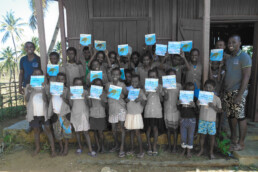
409 community members trained in protected-area management, fisheries monitoring and marine ecology, exceeding the original target of 300.
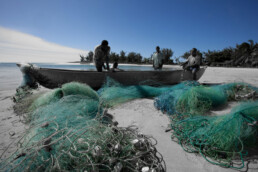
More than 56,000 fisheries landings recorded, creating an unprecedented evidence base for fisheries management across the three project areas.
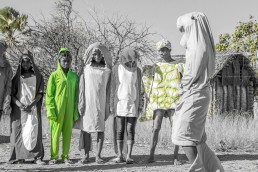
132 community awareness events delivered, three times the original target, reaching more than 5,000 people.
90 Junior Ecoguards trained across 12 schools, helping young people become environmental leaders within their communities.
Community monitoring systems and socioeconomic databases were established at all three sites, while fisheries data began to be used directly in local governance discussions and management planning.
Practical management actions included strengthened local fisheries rules, support for community enforcement, improved post-harvest storage and development of locally appropriate approaches to issues including gear restrictions, seasonal closures and threatened species.
Lasting Impact
The independent final evaluation found that one of the project’s most important impacts was a change in how communities understood their fisheries. Community-generated data showed that catches and resources were often more limited than people had assumed, increasing support for fisheries management and closures.
The evaluation also highlighted strengthened local governance, greater participation by women, improved collaboration with regional fisheries authorities and increased community ownership of fisheries information.
ECOFISH demonstrated that community-led data collection can do more than generate scientific information: it can change perceptions, strengthen local institutions and create the foundation for better fisheries management.
Related Case Studies
Contact
C3 MadagascarLot II PA 12 Bis, Soavinimerina, Ambohimanga Rova, Antananarivo, Avaradrano
C3 Madagascar (CONSERVATION CENTREE SUR LA COMMUNAUTE C3 MADAGASCAR), in accordance with Article No. 5 of Ordinance No. 60133, is registered as a non-profit organization in Madagascar under the Direction of the Territorial Administration of Antananarivo with Registration No. 1206/14-MID/SG/DGAT/DIRAT/ANT/ASS.